
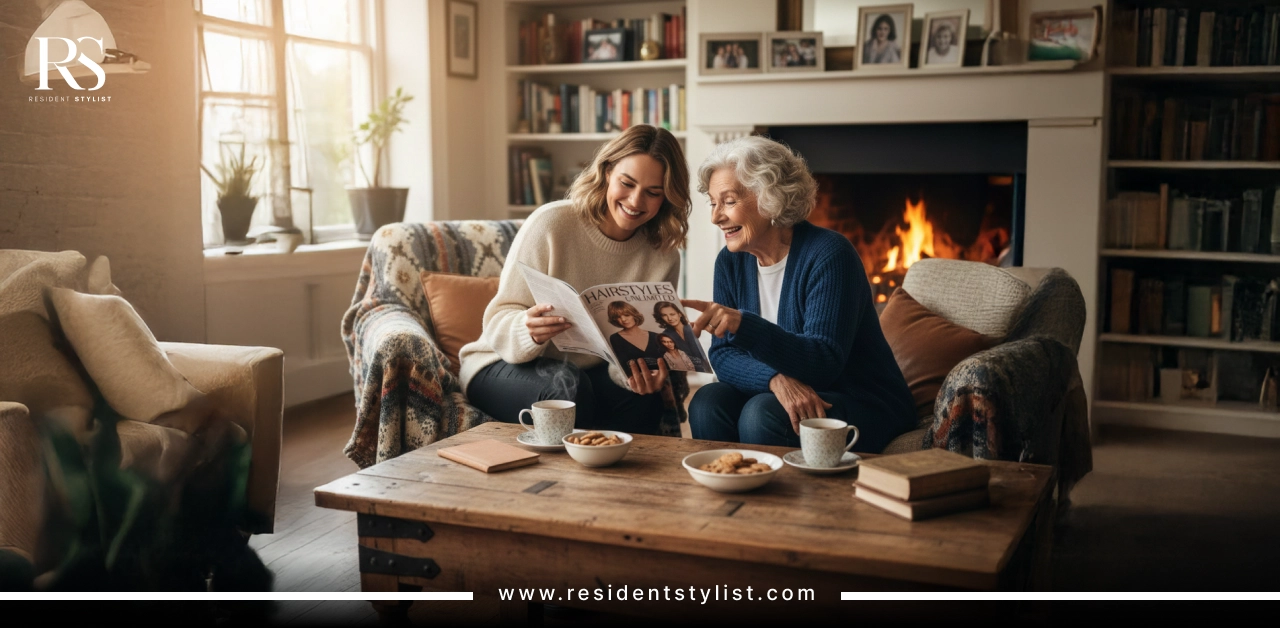
As our loved ones grow older, their hair naturally changes—often in ways that feel sudden or unfamiliar. Maybe you’ve noticed their once-thick hair becoming softer, finer, or more fragile. Or perhaps gray strands have taken on a coarse or wiry texture that no longer behaves the way it once did. These shifts are completely normal, and they are part of the beautiful aging process.
What many families don’t realize is that choosing the right haircut during these stages can have a remarkable impact on confidence, comfort, and day-to-day wellbeing. A thoughtful style can help seniors feel more like themselves, reduce daily maintenance, and even improve their mood.
At ResidentStylist, we specialize in supporting older adults through these changes by providing licensed, professional stylists who come directly to senior living communities. With a gentle touch, experienced eyes, and true compassion, our team helps residents look and feel their best—right where they are.
Understanding How Aging Affects Hair
As the body ages, hair goes through a variety of structural and chemical changes:
▶ Less Melanin = More Gray
Melanin gives hair its color. Over time, hair follicles produce less melanin, which leads to gray or white strands. This is natural and varies widely from person to person.
▶ Lower Sebum Production = Dryness
Sebum is the natural oil that keeps hair soft and moisturized. With age, follicles produce less of this oil, leaving hair drier, more brittle, or more sensitive.
▶ Changes in Thickness and Density
Hair that was thick and coarse in one’s 40s or 50s may become finer or more delicate in later years. Some individuals experience thinning at the crown, temples, or overall.
▶ Texture Shifts
Gray hair can become coarse or wiry. Fine hair can lose its ability to hold a curl. Formerly manageable hair may start to behave unpredictably.
While these changes are natural, they can sometimes affect how seniors feel about their appearance. A haircut that embraces these changes—not fights against them—can make all the difference.
Choosing the Right Cut for Changing Textures
As a relative, caregiver, or POA, helping your loved one choose an age-appropriate and texture-friendly haircut is more than a grooming decision—it’s an opportunity to bond, connect, and support their confidence.
Here’s what to look for depending on the hair type and challenges you’re noticing:
1. For Thinning or Fine Hair
When hair becomes fine, soft, or sparse, the goal is to create the illusion of fullness without adding extra styling work.
Best Options:
- Shorter cuts (chin-length or above)
- Layered pixies
- Soft, stacked bobs
- Textured top layers to add volume
Why They Work:
Shorter, layered cuts create natural lift at the roots and give the appearance of density. They also reduce the weight that can pull thin hair flat. These styles frame the face beautifully and require very little daily maintenance—ideal for seniors who want an easy, elegant look.
2. For Coarse or Wiry Gray Hair
Gray hair can sometimes feel rough or unruly, especially when it loses moisture.
Best Options:
- Slightly longer cuts that allow the hair to relax
- Soft layers that remove bulk without adding frizz
- Shoulder-length cuts with light shaping
Why They Work:
Longer lengths help weigh down wiry hair, making it easier to manage. Combined with conditioning treatments or gentle smoothing techniques, these cuts can help seniors feel polished without needing heat styling or heavy products.
ResidentStylist stylists bring gentle products and tools to each community appointment, helping residents keep their texture soft, hydrated, and comfortable.
3. For Residents With Low Mobility
For seniors facing mobility challenges, energy limitations, or medical conditions, the ideal haircut is one that looks great with minimal effort.
Best Options:
- Wash-and-wear cuts that keep their shape naturally
- Low-maintenance pixies
- Soft bobs with no heat styling required
- Short, comfortably layered shapes
Why They Work:
On days when getting out of bed is difficult or fatigue sets in, hair shouldn’t become a burden. These cuts stay neat without curling irons, blow dryers, or complicated upkeep. They empower residents to feel clean and confident without added stress.
For seniors who prefer longer hair but struggle with mobility, our stylists can also offer simple, low-maintenance styling alternatives such as gentle trims, bangs reshaping, or braid-friendly lengths.
The Expert Touch: Why Professional Guidance Matters
Choosing the right cut is both an art and a science—especially when working with aging hair. That’s why ResidentStylist trains every stylist to understand:
✔ Senior hair textures
✔ Mobility limitations
✔ Gentle techniques
✔ Comfort-first service
✔ Safety and hygiene standards
✔ Compassionate communication
Our stylists don’t just cut hair—they listen, observe, and adapt to each resident’s physical condition, face shape, personality, and grooming needs.
Families consistently tell us how transformative these services can be:
- A new haircut can spark confidence.
- A trim can help residents feel fresh and dignified.
- A gentle styling session can create a moment of emotional connection.
- A simple wash-and-wear style can restore comfort and independence.
When seniors feel good about how they look, it influences their mood, social engagement, and sense of self. Grooming is a form of care—and dignity.
Support Your Loved One’s Confidence and Comfort
If you’ve noticed your loved one’s hair changing, you’re not alone. Aging is natural—and adapting their style to their current needs is one of the kindest things you can do.
At ResidentStylist, we bring licensed, caring professionals directly to senior living facilities, offering:
✨ Haircuts
✨ Styling
✨ Grooming care
✨ Personal attention
✨ Compassionate service
All without the stress of transportation, appointments, or leaving the comfort of their community.
Give your loved one the gift of confidence.
Encourage their senior living facility to partner with ResidentStylist so residents can receive personalized styling, expert advice, and compassionate care—right where they feel most comfortable.
Let us help your loved one look good, feel good, and embrace every stage of life with dignity.
FAQs
1. Why does hair change as we age?
Hair naturally loses melanin and sebum over time, which causes graying, dryness, and changes in texture or thickness. These shifts are completely normal.
2. What hairstyles work best for thinning senior hair?
Shorter, layered cuts like pixies or bobs help create volume and give the appearance of fuller, thicker hair without extra styling.
3. How do I choose a haircut for a senior with limited mobility?
Opt for wash-and-wear styles that hold their shape with minimal daily effort. Low-maintenance pixies and soft bobs are excellent choices.
4. Can coarse or wiry gray hair be styled easily?
Yes. Slightly longer cuts with soft layers, combined with conditioning treatments, help gray hair stay manageable and less frizzy.
5. Does ResidentStylist provide grooming services in senior living communities?
Absolutely. ResidentStylist brings licensed stylists directly to assisted living and care facilities, offering personalized haircuts and grooming for seniors.